Material Testing

Premeasure Material Testing

since 2010

What Can We Offer
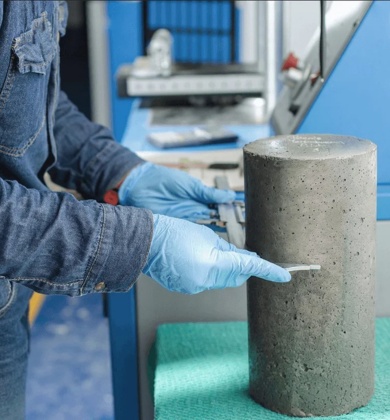
Concrete Testing

Concrete testing is essential to ensure the strength, durability, and quality of concrete used in construction projects. Our concrete testing services evaluate material performance at various stages, helping ensure compliance with design specifications and industry standards.

Concrete testing assesses the strength, durability, and quality of concrete to ensure it meets construction standards.

  • Tests include compressive strength, slump, and permeability.
  • Ensures concrete can withstand load and environmental conditions.
  • Vital for safe and long-lasting structures.

Through systematic testing and analysis, we help identify potential issues early, ensuring structural safety and long-term performance of buildings and infrastructure.

Key Features of Our Concrete Testing Services:
Strength Testing:Conducts compressive, tensile, and flexural strength tests to verify concrete performance.
Quality Assessment:Evaluates consistency, workability, and material composition of concrete mixes.
Fresh & Hardened Concrete Testing:Testing at different stages to ensure proper curing and durability.
Compliance with Standards:Ensures adherence to relevant IS codes and construction specifications.
Durability Evaluation:Assesses resistance to environmental factors such as moisture, temperature, and chemical exposure.
On-Site & Laboratory Testing:Provides flexible testing solutions at site and in certified laboratories.
Defect Identification:Detects issues such as improper mix ratios, poor compaction, or inadequate curing.

Our concrete testing services provide reliable quality assurance, structural confidence, and compliance, supporting safe and durable construction outcomes.
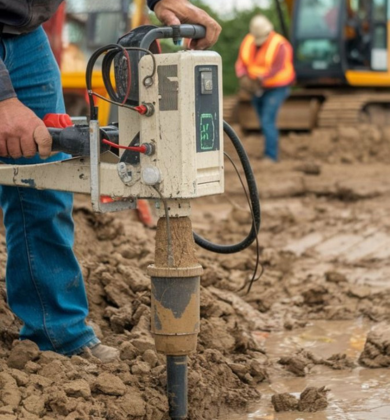
Soil Testing

Soil testing is a critical step in assessing the suitability of land for construction and infrastructure development. It involves detailed analysis of the soil’s physical and chemical properties to ensure that foundations and earthworks are designed safely and efficiently.

Soil testing determines the suitability of soil for construction by analyzing its physical and chemical properties.

  • Evaluates bearing capacity and settlement behavior.
  • Identifies soil composition and moisture levels.
  • Essential for designing foundations and earthworks.

By understanding soil behavior and characteristics, soil testing helps prevent structural issues, excessive settlement, and long-term failures.

Key Features of Our Soil Testing Services:
Bearing Capacity Evaluation:Determines the load-carrying capacity of soil to support safe foundation design.
Settlement Analysis:Assesses potential settlement behavior to avoid uneven or excessive ground movement.
Soil Composition Identification:Analyzes soil types, gradation, and stratification for accurate engineering decisions.
Moisture Content & Density Testing:Evaluates water content and compaction characteristics affecting stability.
Chemical Property Analysis:Identifies soil aggressiveness, salinity, and chemical content that may affect materials.
Foundation Design Support:Provides critical data for selecting suitable foundation types and depths.
Earthwork Planning:Assists in planning excavation, filling, and ground improvement measures.

Our soil testing services ensure safe foundation design, informed engineering decisions, and long-term structural stability, forming a strong base for successful construction projects.

Aggregate Testing

Aggregate testing is essential to ensure the quality, strength, and durability of aggregates such as sand, gravel, and crushed stone used in concrete, asphalt, and other construction materials. Proper testing helps maintain material performance, structural integrity, and long-term durability of construction projects.

Aggregate testing ensures the quality of aggregates (sand, gravel, and crushed stone) used in construction materials like concrete and asphalt.

  • Checks particle size, shape, and texture.
  • Tests for durability and resistance to weathering.
  • Ensures proper bonding with cement and asphalt.

By evaluating physical and mechanical properties, aggregate testing supports effective mix design and ensures compliance with construction standards.

Key Features of Our Aggregate Testing Services:
Particle Size & Gradation Analysis:Determines proper size distribution for concrete and asphalt mix requirements.
Shape & Texture Evaluation:Assesses flakiness, elongation, and surface texture to ensure good interlocking and workability.
Durability & Weathering Resistance:Tests aggregates for resistance to abrasion, impact, and environmental exposure.
Strength & Toughness Testing:Evaluates aggregate strength to withstand applied loads and traffic stresses.
Bonding & Adhesion Assessment:Ensures effective bonding with cement paste and asphalt binder.
Cleanliness & Impurity Checks:Detects clay, silt, and organic impurities that may affect material performance.
Compliance with Standards:Conducts testing as per relevant IS codes and construction specifications.

Our aggregate testing services ensure reliable material performance, improved construction quality, and long-lasting structural durability, supporting safe and efficient building practices.
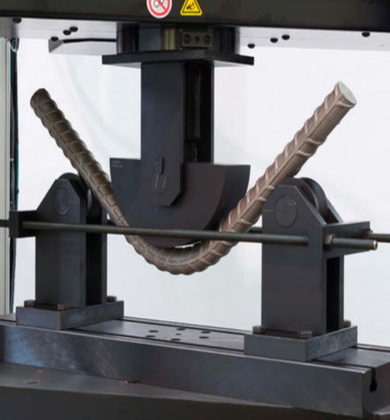
Steel Testing

Steel testing is vital to ensure the strength, ductility, and quality of steel materials used in construction and infrastructure projects. Proper testing confirms that steel components meet design requirements, safety standards, and performance expectations under various load and stress conditions.

Steel testing evaluates the strength, ductility, and composition of steel used in construction to ensure safety and compliance.

  • Includes tensile strength, hardness, and bend tests.
  • Ensures steel can handle structural loads and stresses.
  • Critical for high-rise and industrial projects.

By verifying mechanical and chemical properties, steel testing plays a critical role in maintaining structural integrity, especially in high-rise, industrial, and heavy-load structures.

Key Features of Our Steel Testing Services:
Tensile Strength Testing:Determines the load-carrying capacity and elongation characteristics of steel.
Hardness Testing:Evaluates resistance to wear, deformation, and surface damage.
Bend & Re-Bend Tests:Assesses ductility and flexibility to ensure steel performs safely under stress.
Chemical Composition Analysis:Verifies steel grade and compliance with material specifications.
Structural Load Verification:Ensures steel can safely handle design loads and operational stresses.
Compliance with Standards:Conducts testing as per applicable IS codes and industry norms.
Laboratory & On-Site Testing:Provides reliable testing solutions at manufacturing sites or construction locations.

Our steel testing services deliver assured material quality, structural safety, and regulatory compliance, supporting reliable and durable construction outcomes.
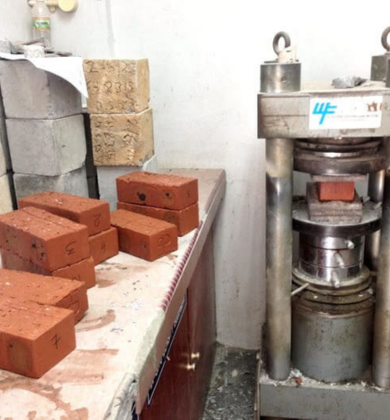
Brick and Block Testing

Brick and block testing is essential to evaluate the strength, durability, and quality of masonry units used in construction. Proper testing ensures that bricks and blocks meet required standards and perform reliably in both load-bearing and non-load-bearing applications.

Brick and block testing measures the strength, water absorption, and durability of masonry units to ensure they meet quality standards.

  • Compression and flexural strength tests for load-bearing.
  • Assesses thermal and water resistance properties.
  • Verifies dimensional accuracy and material consistency.

By assessing mechanical, physical, and durability properties, brick and block testing supports safe construction practices and long-term structural performance.

Key Features of Our Brick & Block Testing Services:
Compressive Strength Testing:Determines the load-bearing capacity of bricks and blocks used in masonry structures.
Flexural Strength Assessment:Evaluates resistance to bending and cracking under applied loads.
Water Absorption Testing:Measures water resistance to assess durability and suitability for various environments.
Thermal Performance Evaluation:Assesses thermal resistance and insulation characteristics for energy-efficient construction.
Dimensional Accuracy Verification:Checks size, shape, and tolerances to ensure uniformity and proper bonding.
Material Consistency Analysis:Ensures uniform quality across production batches.
Compliance with Standards:Conducts testing as per applicable IS codes and construction specifications.
Testing Reports & Quality Certification:Provides detailed documentation for quality assurance and regulatory approvals.

Our brick and block testing services ensure reliable masonry performance, construction quality, and long-term durability, supporting safe and efficient building practices.
Bitumen Testing

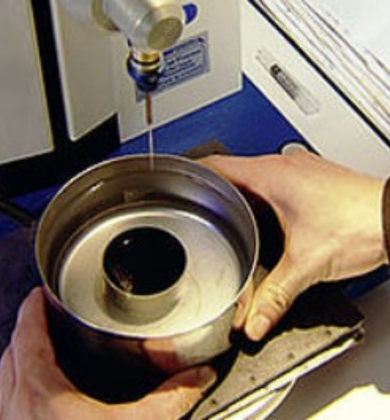
Bitumen testing is essential to assess the quality, durability, and performance of bitumen used in road construction and pavement works. Proper testing ensures that bitumen can withstand traffic loads, temperature variations, and environmental conditions, contributing to long-lasting and reliable road surfaces.

Bitumen testing evaluates the properties of bitumen used in road construction to ensure durability and performance.

  • Tests include penetration, viscosity, and softening point.
  • Ensures resistance to temperature variations and wear.
  • Critical for long-lasting pavement and road surfaces.

By evaluating physical and rheological properties, bitumen testing helps in selecting suitable grades and maintaining consistent quality in road projects.

Key Features of Our Bitumen Testing Services:
Penetration Testing:Determines the hardness or softness of bitumen for appropriate pavement applications.
Viscosity Testing:Evaluates flow characteristics to ensure proper mixing, laying, and compaction.
Softening Point Testing:Assesses temperature susceptibility and resistance to deformation at high temperatures.
Ductility Testing:Measures the ability of bitumen to deform without cracking under stress.
Flash & Fire Point Testing:Ensures safety during heating and application processes.
Resistance to Temperature Variations:Evaluates performance under both high and low temperature conditions.
Durability & Aging Tests:Assesses long-term performance and resistance to weathering.

Our bitumen testing services ensure durable pavements, consistent material quality, and long-term road performance, supporting safe and cost-effective road infrastructure development.

Durability Testing

Durability testing evaluates the ability of construction materials and structural elements to withstand environmental stresses, aging, and repeated use over time. This testing is crucial to ensure long-term performance, minimize maintenance costs, and support sustainable construction practices.

Durability testing assesses how materials perform under environmental stress, ensuring longevity and reduced maintenance.

  • Includes freeze-thaw, abrasion, and chemical resistance tests.
  • Identifies potential deterioration factors in materials.
  • Essential for sustainable construction practices.

By simulating real-world exposure conditions, durability testing helps identify potential weaknesses early and ensures that materials remain reliable throughout their service life.

Key Aspects of Durability Testing:
Freeze–Thaw Resistance Testing:Assesses material performance under repeated temperature fluctuations.
Abrasion Resistance Testing:Evaluates resistance to surface wear caused by traffic and mechanical action.
Chemical Resistance Testing:Determines durability against chemicals, salts, and aggressive environments.
Weathering and Aging Tests:Simulates long-term exposure to sunlight, moisture, and pollutants.
Identification of Deterioration Factors:Detects cracking, corrosion, scaling, and material degradation.
Support for Sustainable Construction:Helps in selecting durable materials that reduce repair and replacement needs.
Compliance with Standards:Testing conducted as per relevant IS codes and international specifications.

Our durability testing services help ensure long-lasting, resilient, and low-maintenance structures, enabling safer and more economical construction outcomes.
Structural Stability Testing

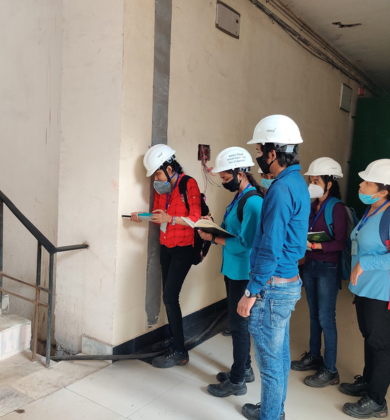
Structural stability testing assesses the strength, safety, and overall integrity of existing structures to ensure they can safely withstand operational loads and environmental conditions. This testing plays a vital role in evaluating aging buildings, post-construction performance, and structures requiring repair or modification.

Structural stability testing evaluates the strength and integrity of materials and components in existing structures.

  • Verifies resistance to loads, vibrations, and environmental stress.
  • Critical for retrofitting and maintenance planning.
  • Ensures compliance with safety standards.

Through systematic inspection and scientific testing methods, structural stability testing helps identify potential risks and supports informed decision-making for maintenance and strengthening.

Key Aspects of Structural Stability Testing:
Load Resistance Evaluation:Verifies the structure’s ability to withstand dead loads, live loads, and impact forces.
Vibration and Dynamic Response Analysis:Assesses behavior under vibrations caused by traffic, machinery, wind, or seismic activity.
Environmental Stress Assessment:Evaluates effects of temperature changes, moisture, corrosion, and weathering.
Condition Assessment of Structural Elements:Examines beams, columns, slabs, and foundations for distress or deterioration.
Support for Retrofitting Decisions:Provides essential data for repair, strengthening, or seismic retrofitting plans.
Maintenance and Safety Planning:Helps prioritize repairs and prevent structural failures.
Compliance with Safety Codes:Ensures adherence to applicable building codes and structural safety standards.

Structural stability testing ensures safe occupancy, extended service life, and regulatory compliance, offering confidence to building owners, engineers, and authorities alike.
Cement Testing

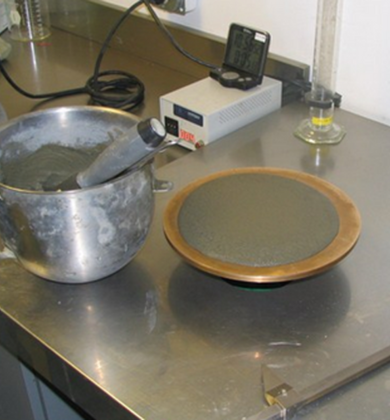
Cement testing ensures the quality, performance, and reliability of cement, which is a critical binding material in all types of construction. By evaluating both physical and chemical properties, cement testing helps confirm that the material meets prescribed standards and performs effectively in structural applications.

Cement testing ensures the quality of cement, a primary binding material, by evaluating its physical and chemical properties.

  • Tests include fineness, setting time, and compressive strength.
  • Ensures proper bonding and load distribution in construction.
  • Guarantees material reliability for various applications.

Proper testing of cement is essential to achieve strength, durability, and long-term stability in concrete and masonry works.

Key Aspects of Cement Testing:
Fineness Test:Determines particle size, influencing strength development and workability.
Setting Time Test:Measures initial and final setting times to ensure adequate workability and proper hardening.
Compressive Strength Test:Evaluates the load-bearing capacity of cement mortar.
Soundness Test:Checks for excessive expansion that could lead to cracking.
Consistency Test:Ensures proper water requirement for achieving standard paste.
Chemical Composition Analysis:Verifies compliance with standard chemical limits for durability and safety.

Cement testing ensures proper bonding, uniform load distribution, and structural integrity, making it a vital quality control process for reliable and durable construction projects.

Land Development Feasibility Studies

Feasibility studies evaluate the potential for land development, considering environmental, legal, and financial factors.
  • Assesses the viability of proposed projects.
  • Identifies risks and opportunities in development.
  • Guides informed decision-making for stakeholders.

Advanced Testing for Special Concretes for Research Purpose

Advanced testing focuses on innovative concrete mixes for research, including high-performance, lightweight, and self-healing concretes.

  • Analyzes microstructure and performance under unique conditions.
  • Facilitates development of sustainable and high-strength materials.
  • Supports research for cutting-edge construction technologies.

Digital Surveying and Drone Mapping

Digital surveying and drone mapping use advanced technology to capture high-resolution images and precise measurements of large areas.
  • Delivers faster and more accurate survey results.
  • Ideal for hard-to-reach or large-scale areas.
  • Integrates seamlessly with GIS and CAD for analysis.

Why Choose Us?

Why Choose PreMeasure for Material Testing?

Advanced testing

Advanced testing facilities and skilled technicians.
01

Compliance

Compliance with IS standards and industry benchmarks.
02

Detailed and Accurate

• Detailed and accurate reports to guide construction decisions.
03